
Ingredients and everyday meals
Corn Tortillas and Restricted Diets: A Simple Place to Start
How a short ingredient list and a familiar food can help you build meals around what works for you.
A warm tortilla has a way of making a few ingredients feel like a meal. Fold it around a familiar filling, set it beside a bowl of soup, or carry a stack to the table under a towel, ready for dinner. There is comfort in knowing what to do with it.
When you live with food allergies or digestive concerns, that familiarity can be especially welcome. You may already know which vegetables agree with you, how you like your chicken prepared, or which ingredients belong in your kitchen. A useful staple gives those choices somewhere to go.
For many people who tolerate corn, a simple corn tortilla can become that staple. Its ingredients are easy to understand, and what you put inside can change with your appetite, your needs, and whatever is waiting in the refrigerator.
Three ingredients, plenty of possibilities
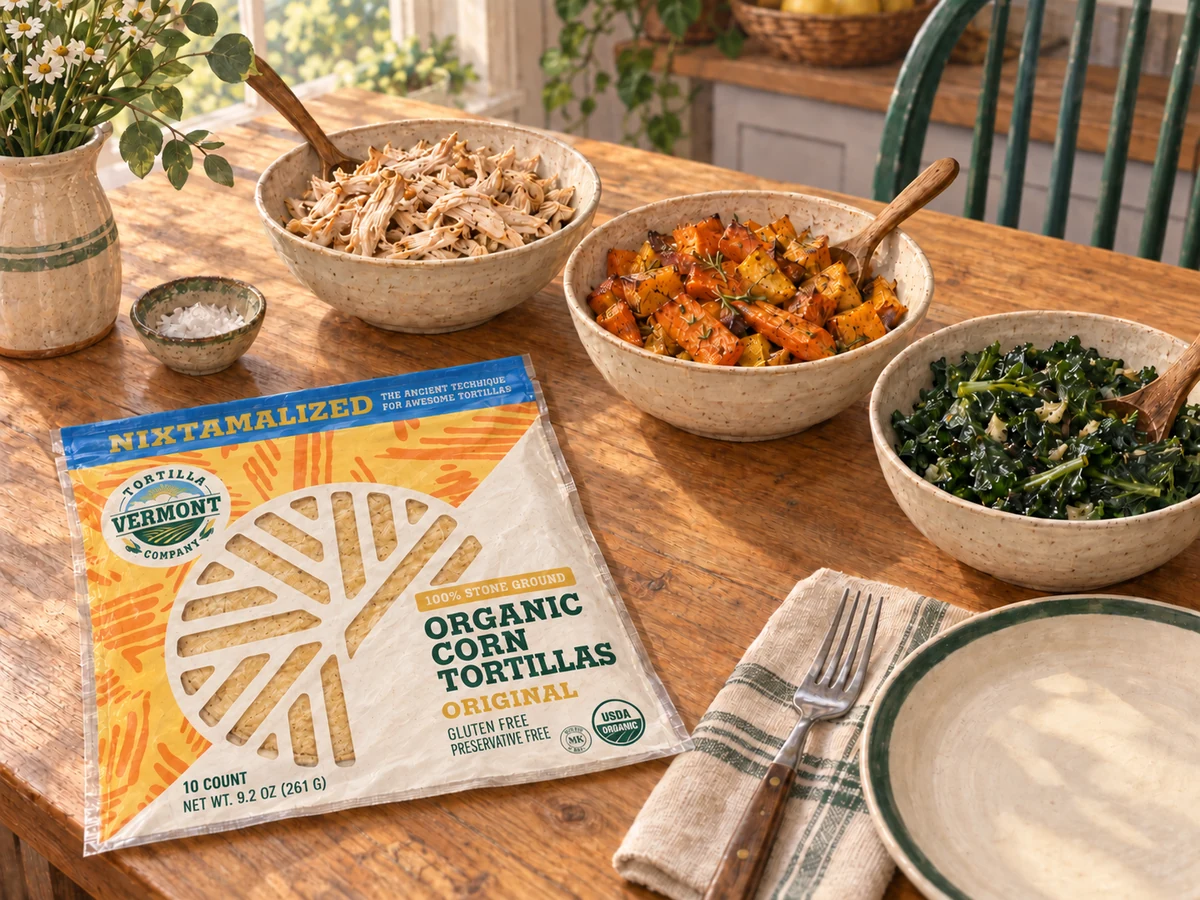
Our Original corn tortillas begin with organic corn, water, and slaked lime. We make them without preservatives, keeping the recipe centered on the grain and its preparation.
Slaked lime is food-grade calcium hydroxide, the ingredient used in nixtamalization. We cook and steep whole corn with lime and water, then wash it and stone-grind it into fresh masa. This preparation turns the kernels into dough we can shape and cook into tortillas. You can follow that sequence in our tortilla-making process.
Choosing organic corn is part of how we approach that first ingredient. USDA organic standards prohibit genetic engineering, connecting certified organic production with our choice of non-GMO corn. Our story From Essex to Essex introduces the family growing the grain and its journey to our tortilleria in Vermont.
Those choices become something you can taste and use: a tortilla with full corn flavor, a rustic texture, and a soft fold when warmed. The short recipe leaves you room to decide what the rest of the meal will be.
Where a simple corn tortilla can fit
Corn is naturally gluten-free. The National Institute of Diabetes and Digestive and Kidney Diseases includes it among the foods suitable for making gluten-free flour. Our Original tortillas are gluten-free, giving someone who avoids gluten a familiar option for wraps, tacos, and other meals.
The basic recipe also contains no wheat, milk, eggs, or soy. If you avoid dairy, you can begin with the tortilla and choose a filling prepared without cheese, butter, or cream. If eggs or soy are ingredients you avoid, neither is needed to make this tortilla. Corn, water, and lime also provide a straightforward base for plant-based meals.
People arrive at these choices for different reasons. Wheat allergy and celiac disease are distinct conditions, as Allergy UK's explanation of reactions to wheat describes. Likewise, lactose intolerance concerns milk sugar, while milk allergy concerns milk proteins. Knowing the particular ingredient you need to avoid helps you choose the food around it.
For food allergies, read the current package's ingredient and allergen information, and ask the maker about handling when the package does not answer your question. Our guide to reading a tortilla label walks through that information. People with a corn allergy need a different base.
For someone whose diet includes corn, the appeal is practical: one familiar food can work with several different sets of ingredients. The meal takes its shape from the choices that suit the person eating it.
When digestion shapes the menu
Digestive needs can bring their own questions to the table. Someone living with irritable bowel syndrome, or IBS, may be following a low-FODMAP plan to understand their response to certain fermentable carbohydrates. NIDDK's dietary guidance for IBS explains that different changes help different people.
Corn tortillas have a place in that conversation. Monash University, whose researchers developed the low-FODMAP diet, includes them in its guidance for making ground beef tortillas. The same guidance pays attention to the other ingredients, including stock and seasonings.
That is a useful way to think about your own meal. The tortilla, its filling, the sauce, and the amount you eat all belong in the picture. If you follow a low-FODMAP plan, use current Monash serving guidance and the portions that fit your plan when choosing tortillas and additions.
Monash's three-step approach moves toward a personalized diet with as much variety as the person tolerates. A dietitian can help guide that process. Within it, a familiar food can make the daily work of preparing lunch or dinner feel more manageable.
Build from foods you already know
Begin with a filling you already enjoy and know works for you. Perhaps that is shredded chicken and roasted carrots, seasoned the way you like them. Warm the filling, soften the tortilla, and bring the two together. A meal you have made many times can take a different form with very little extra work.
For a plant-based meal, you might fold a tortilla around roasted squash and greens, choosing vegetables and portions you already know suit you. A spoonful of beans can give the filling more substance when beans are among the foods you tolerate. Add an herb or seasoning you enjoy and let the tortilla bring its corn flavor to the combination.
A favorite soup offers another possibility. Warm a tortilla to serve alongside it, ready to tear and eat between spoonfuls. You can use the same staple in several ways without learning a new recipe each time.
Sauces and toppings deserve their own moment of attention. A dressing may contain soy, a creamy sauce may contain dairy, and a seasoning blend may include onion or garlic. Read the ingredients for the things that matter to your diet. Making a familiar sauce yourself can also give you a clear picture of what goes into it.
This is where a simple base earns its place in the kitchen. You can keep the tortilla familiar while changing the filling, the seasoning, or the way you serve it.
Make room for everyone at the table
A household may have several different ways of eating. Preparing a meal together works best when the ingredients and serving tools have clear places from the beginning.
Start with washed hands, a clean pan, and properly washed utensils. Prepare the portion for the person with a food allergy first, using ingredients that meet their needs, and keep it covered and separate while finishing the other portions. Give each filling its own serving spoon, and handle optional toppings separately.
FARE's guide to avoiding cross-contact explains why these details matter: food proteins can travel between ingredients on hands, utensils, and preparation surfaces. Heating does not remove an allergen that has already transferred into a food. For someone with a milk allergy, preparing a taco without cheese is different from taking cheese off one that has already been assembled.
With the suitable portion prepared and set aside, the rest of dinner can come together around it. Everyone can have a meal chosen with their needs in mind.
Keep the tortillas ready and warm them well
Having a familiar staple on hand makes it easier to decide what to eat. Our tortillas keep 21 days refrigerated or one year frozen, giving you a way to plan for the week and keep some available for another meal.
When you are ready to use them, warm the tortillas before filling. A skillet brings warmth back through the tortilla; a short rest in a clean towel helps the stack stay soft while you finish preparing the meal. Our warming guide explains the steps that help a tortilla fold comfortably around its filling.
That small piece of preparation is worth making part of the routine. You can smell the corn as it warms, feel the tortilla become more flexible, and bring it to the table ready to eat.
More room for a meal you enjoy
Once you have a base you know and ingredients that work for you, dinner becomes easier to picture. Tonight it might be a tortilla folded around a warm filling. Tomorrow it might be the same tortilla alongside a bowl of soup.
There is room for your preferences in those decisions: the texture of the vegetables, the seasoning you enjoy, the portion that suits your appetite. A simple corn tortilla gives those choices a familiar place to meet. From there, you can get on with the pleasure of making a meal and sitting down to enjoy it.