
People and place
From Essex, New York, to Essex, Vermont: The Corn Behind Our Tortillas
Meet the family growing our corn, explore the choices made in the field, and follow the grain into the fresh masa behind our tortillas.
You may know our tortillas by their aroma in a warm skillet, or by the soft fold that holds your favorite filling. Getting to know the corn behind them adds another pleasure: being able to picture where the food begins.
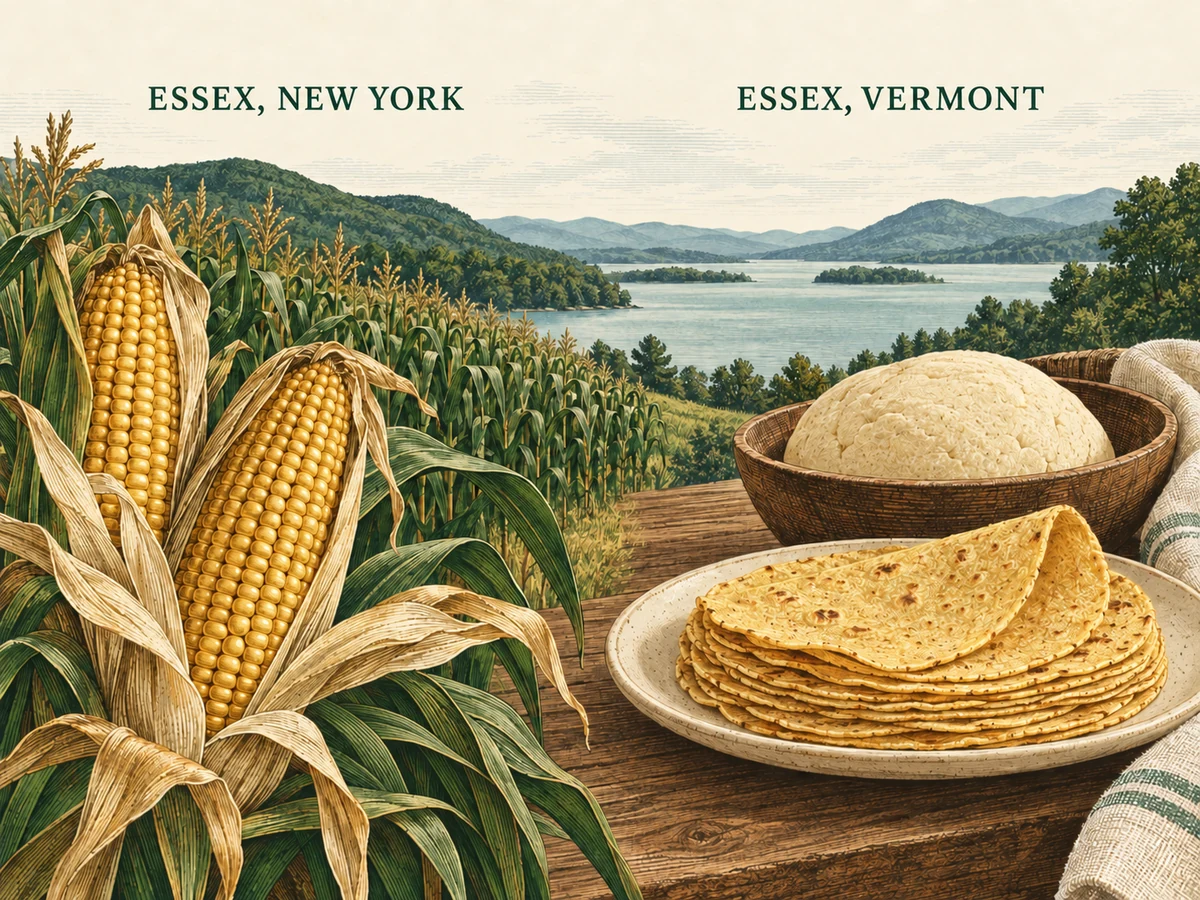
At Vermont Tortilla Company, we make our tortillas in Essex, Vermont, with organic corn grown by Adirondack Hay and Grains in Essex, New York. The shared name makes the connection easy to remember. On one side is the work of growing the grain; on the other is the work of turning it into fresh masa and tortillas.
Following that connection brings a few more people into view. There is a family thinking about what to plant before the next corn crop. There is a grower finding customers close to home. And there are tortilla makers paying attention to what that grain will become. Together, their work gives a familiar food a story worth knowing.
The family growing the corn
Adirondack Hay and Grains is part of the agricultural life of the Champlain Valley. In a 2021 feature for Modern Farmer, journalist Lindsay Campbell described Mark Wrisley's progression from hay production into organic wheat and soybeans, then corn. As regional food and drink businesses sought grain, new customers became part of the farm's work. Vermont Tortilla Company was among them.
The family appears again in the 2025 Champlain Valley Local Food & Farm Guide, where writer Susan Smiley describes Mark and his sons Derrick and Clayton growing organic corn alongside other grains and crops.
One detail in that account is particularly useful for understanding the work behind an ingredient. The family was experimenting with cover crops, including red clover following rye and a mixture of vetch and rye before planting corn. Smiley describes the rye-and-vetch combination as a way to contribute nitrogen and suppress weeds ahead of the corn crop.
For someone who usually encounters corn in a tortilla, that is another stage to picture. The farmer is making decisions before the corn is even in the ground. What grows beforehand becomes part of preparing for what comes next.
It gives our interest in soil health a practical setting. There are plants to choose, combinations to try, and results to observe. The crop we use begins within that continuing work.
Why the grower relationship matters
Working directly with our grower keeps us connected to the source of our main ingredient. We know where the corn comes from and can understand it in the context of the farm that produces it. That relationship is part of the confidence we bring to making tortillas.
There is a connection in the other direction, too. A food business choosing regional grain becomes a customer for the person growing it. In Campbell's Modern Farmer feature, Wrisley described that interest:
“There’s a desire for ingredients from the region and we’re happy to support [them].”
Leyland Papa and Lindsey West have owned Vermont Tortilla Company since the summer of 2025. Our relationship with Adirondack Hay and Grains brings those interests together: a grower with corn to supply and a maker building a food around it.
This is one of the tangible ways a regional food system takes shape. A tortilla company needs grain. A farm needs customers for its harvest. The connection gives each a part in the other's work, and it gives the finished food a source we can name.
For us, the two Essex locations make that relationship especially memorable. They connect the place where our corn grows with the place where we prepare it for your table.
Our choice of organic corn
The corn we use is certified organic through Vermont Organic Farmers. Choosing it is part of our commitment to knowing both the ingredient and the approach to growing it.
Organic production follows defined standards for farming and handling, supported by certification and inspections. Those standards also prohibit the use of genetic engineering, which helps explain the connection between the words organic and non-GMO in our description of the corn.
For us, that choice sits alongside the more personal knowledge of the farm. We care about how the corn is grown and value the relationship with the people growing it.
Thinking about corn as food
Once corn is destined for tortillas, growing and cooking become closely connected questions. A grower considers how a crop performs in the field. A tortilla maker also considers how the grain behaves in the kitchen.
That connection has been part of research here in the region. A University of Vermont project supported by Northeast SARE examined corn's growing characteristics and its qualities in foods. Vermont Tortilla Company and All Souls Tortilleria supplied samples for sensory orientation sessions in 2021. The project also included training with our company in describing and evaluating food's sensory qualities.
That language can sound technical, but its subjects are familiar: aroma, flavor, texture, and the taste that remains after a bite. Describing those qualities carefully gives people a shared way to discuss what they notice.
At the table, you meet them all together. A tortilla has an aroma as it warms, a texture as you fold it, and a flavor alongside the filling. Thinking about the grain with that experience in mind helps connect the farm's work to the food we want to make.
The work continues in Essex, Vermont
When the corn reaches us, our part begins with whole kernels. We cook them in water with food-grade lime, also called calcium hydroxide, and allow them to steep. After washing, we stone-grind the prepared corn into fresh masa.
This preparation is nixtamalization, a technique with deep roots in Mesoamerican food traditions. Water, heat, lime, and time change the grain so it can become the dough used for tortillas. Our story about what nixtamalization does to corn follows those changes in more detail.
Fresh masa is an important stage in the work. The separate kernels have become moist dough, ready for mixing and forming. We pay attention to its consistency as it moves toward cooking, because the grain's preparation and the dough's condition contribute to the finished tortilla.
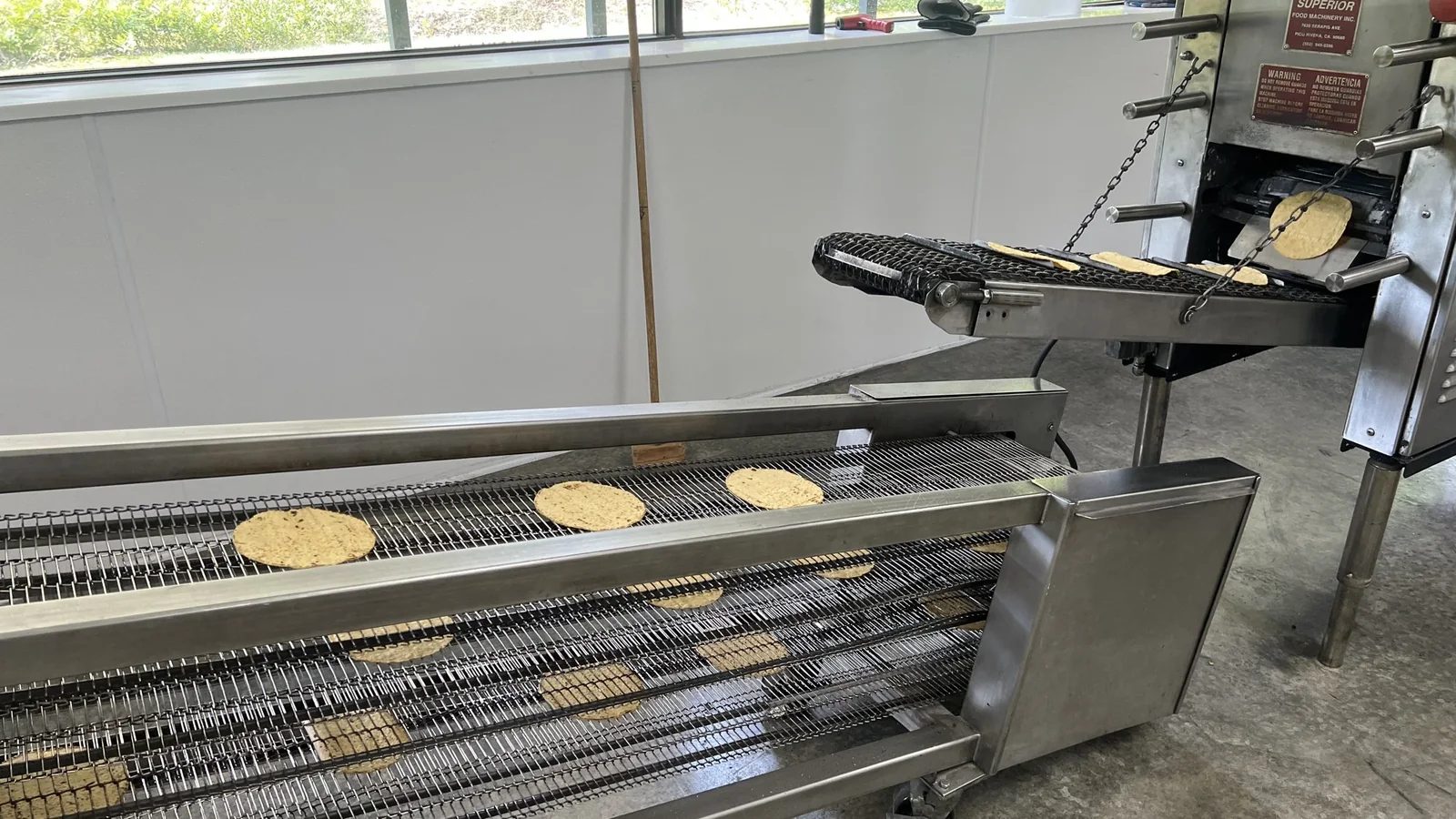
The masa is flattened and cut into rounds, then cooked, cooled, and packed. You can follow those stages in our tortilla-making process. The corn grown in New York has become a food made in Vermont, ready for the next part of its preparation in your kitchen.
Our original corn tortillas keep that ingredient at the center. With just corn, water, and lime, the grain and the way we prepare it have an important place in every bite.
Back at your table
Perhaps you will fill a tortilla with beans and roasted vegetables. Perhaps it will become a quesadilla, with a crisp edge and melted cheese inside. The meal takes its own shape in your kitchen.
Knowing the grower gives you something else to bring to it. Now the corn has a place, the farm has a family, and the tortilla's familiar form has a sequence of work behind it. You can picture a little more of what happened before you opened the pack.
From Essex, New York, to Essex, Vermont, that connection runs through the food we make. When you bring the tortillas to your table, you give the work its most satisfying destination: a meal to enjoy.