
In the kitchen
Why Corn Tortillas Break—and How to Warm Them for a Better Fold
Understand what affects a corn tortilla’s flexibility, and learn the simple warming habits that make folding and filling easier.
Warm beans settle into the center of a tortilla. A spoonful of salsa follows, then a little crumbled cheese. You bring the sides together, ready for the first bite, and a split opens along the bottom. Some of the filling slips onto the plate.
Why corn tortillas break
At Vermont Tortilla Company, we start with organic corn, cook and steep it with lime through nixtamalization, and stone-grind it into fresh masa. The tortillas are formed and cooked before they reach your kitchen. Warming them at home gets them ready to fold and fill.
Part of that preparation has to do with starch. As a corn tortilla cools and is stored, its starch can reorganize into a firmer structure, a process called starch retrogradation. The tortilla becomes less flexible and can be more difficult to fold. Researchers studying corn tortillas have measured how storage temperature affects their stiffness and pliability.
Drying can also affect flexibility. A firm tortilla may need warmth, and a dry or stiff one can benefit from a little water before warming. Paying attention to both helps you bring it to the soft, supple condition that makes a good taco possible.
Warm for the fold you want
Start by getting your filling and toppings ready. Have a clean kitchen towel beside the stove so each tortilla has a warm, covered place to rest as it comes off the heat. If you are using a frozen pack, let it thaw in the refrigerator first. Our story Good Tortillas, Ready When You Are explains how to make that part of your meal routine.
For an everyday skillet method, follow these steps:
- Add a little moisture if needed. If a tortilla feels dry or stiff, lightly dampen both sides with water.
- Heat the pan. Give a dry skillet or comal a moment to warm over medium to medium-high heat.
- Warm both sides. Lay the tortilla on the surface and warm for approximately 30–60 seconds per side. Look for a supple texture; a few toasted spots may appear.
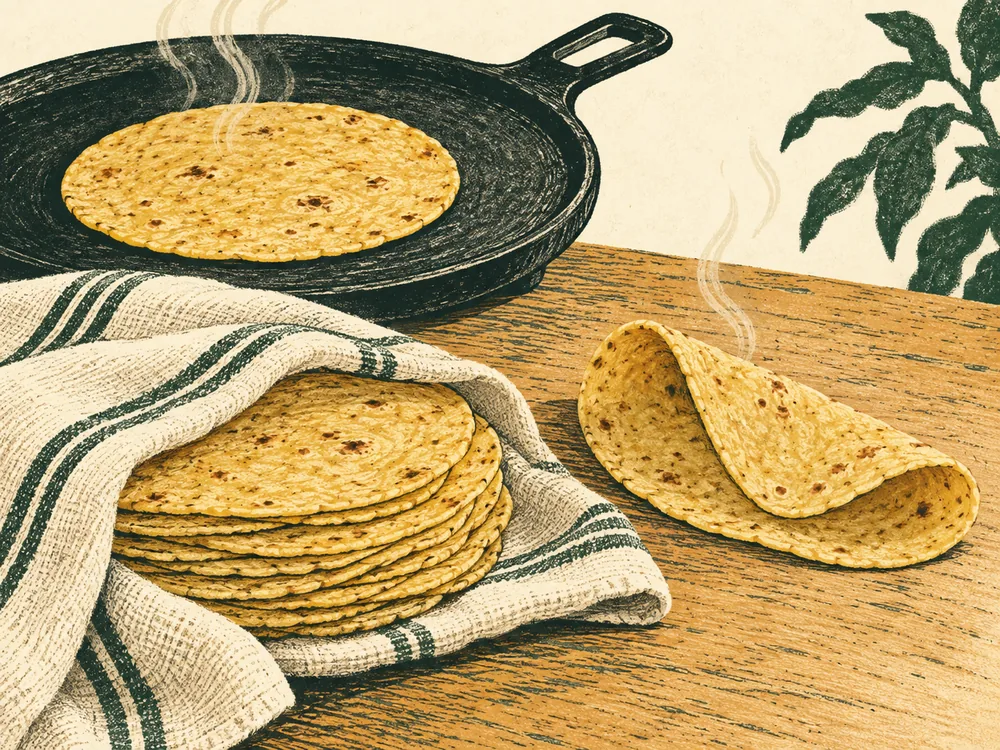
- Cover as you go. Place the warmed tortilla in the clean towel, fold the towel over it, and add the next tortilla to the stack when it is ready. Give the stack a brief covered rest while you finish warming the batch.
Watch the tortilla as well as the time. For a soft taco, it should be warmed through and bend easily. Continued cooking can take it toward the crispness you would want for a tostada. Masienda makes this distinction in its corn-tortilla reheating guidance, recommending a little water and a rest in a warmer for reheating, or a longer stay on the comal for a hard tostada.
Keep the warmth in the stack
The towel is part of the preparation. It holds warmth and a little steam around the stack, helping the tortillas soften and stay supple while you finish the meal. Keep them covered as you work, taking out each tortilla when you are ready to fill it. Our cooking guide describes this method alongside other ways to warm tortillas for the table.
Recognize when your tortilla is ready
Before adding the filling, notice how readily the tortilla bends. It should curve comfortably as you lift its sides. If it still feels cool and stiff, give it a brief warming and check again. If it feels dry, a light dampening before warming can help. A tortilla that was flexible a few minutes ago may also need rewarming if it has cooled during assembly.
A few useful adjustments
A few observations can help you decide what to adjust:
| What you notice | What to try |
|---|---|
| The tortilla feels cool and resists folding. | Warm it briefly and check its flexibility again. |
| It feels dry or stiff. | Lightly dampen both sides, warm, and give it a covered rest. |
| It becomes crisp in the skillet. | For the next tortilla, stop when it is supple and transfer it to the covered stack. |
| The first tortilla folds, but later ones have cooled and stiffened. | Keep the stack covered and rewarm a tortilla before filling when needed. |
| It bends comfortably until the filling is added. | Try a smaller amount of filling and distribute it evenly. |
From a soft taco to a tray of enchiladas
Once the tortilla is ready, give the filling enough room. A modest line of beans, eggs, or vegetables leaves space for the sides to rise around it. Leave a little room for toppings, too. You want a taco that is comfortable to pick up and pleasant to eat.
For quesadillas, the order of preparation makes a difference. Our Cheese Quesadilla recipe begins by warming the tortilla until it is flexible enough to fold. Then comes the cheese, followed by the fold and a turn in the skillet until golden. The tortilla is soft when you shape it; the crisp edges develop afterward.
The amount of filling changes with the tortilla’s size, too. That recipe uses about a quarter cup of cheese in each 6-inch tortilla and two tablespoons in each 4-inch tortilla. The smaller tortilla gets a smaller filling, leaving room for the fold.
The same attention to warmth helps when making Enchiladas. Keep the softened tortillas covered, fill and roll them while warm, and place them seam-side down in the dish. If one cools and stiffens before its turn, rewarm it before rolling. Chef Rick Bayless likewise emphasizes working while tortillas are “hot and pliable” in his enchilada preparation.
Ready for the first bite
These habits also help bring out the corn flavor and satisfying texture of tortillas after freezing. Once the pack has thawed, you can use the same familiar preparation: a little moisture when needed, brief heat, and a covered stack ready for the meal.
Lift a tortilla from the towel. Spoon the warm beans into its center, add the salsa and cheese, and bring the sides together. The tortilla curves around the filling, carrying the aroma of corn into the first bite.
The next one is warm beneath the towel.