
In the kitchen
Fresh Masa, Masa Harina, and Cornmeal: What Is the Difference?
The corn is only the beginning. Discover how preparation turns it into fresh dough, masa flour, or cornmeal—and what that means at the table.
Before the beans, before the salsa, take a small bite of the warm tortilla. The edge is lightly toasted, the center is tender, and the corn has a flavor worth pausing to enjoy. The tortilla brings something of its own to the meal.
That character begins long before it reaches the skillet. It comes from the grain and the work of preparing it: cooking, steeping, grinding, and deciding how the dough should feel before it becomes a tortilla.
Knowing a little about that work makes the food more interesting. It also makes cooking easier. A recipe asks for masa harina, a market offers fresh masa, and a bag of cornmeal waits in the cupboard. All three begin with corn. Understanding how they are made helps explain what each can do—and which one belongs in the meal you have in mind.
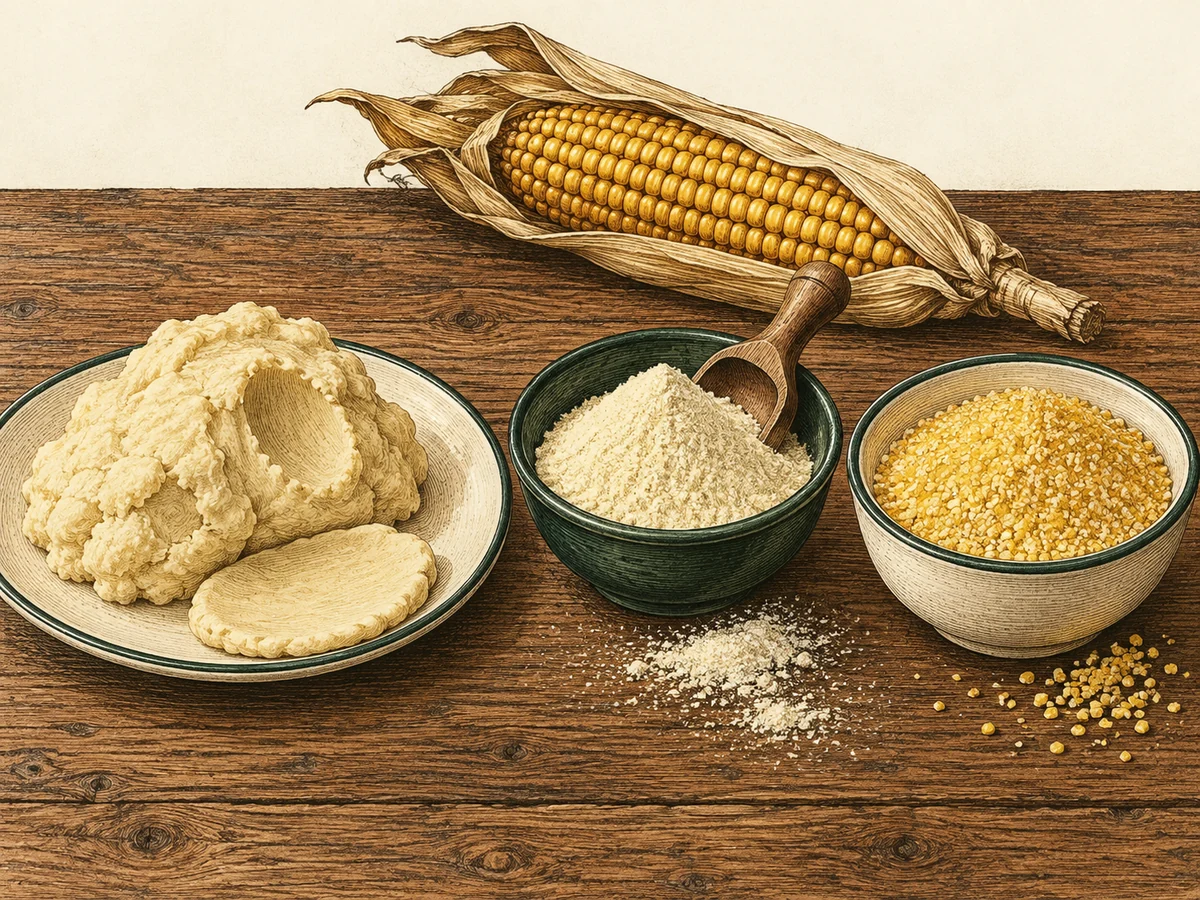
Three ingredients, three starting points
Fresh masa is moist dough made by grinding corn that has undergone nixtamalization, a traditional preparation involving cooking and steeping the grain in alkaline water. Masa harina is dried nixtamalized corn flour that becomes dough when you add water. Ordinary cornmeal is dry-milled corn that has not undergone that treatment.
The distinction involves both preparation and form. Two of these ingredients have a shared foundation in nixtamalization; one arrives as dough and the other as flour. Cornmeal takes a different route from grain to kitchen.
| Ingredient | What you are starting with | What that means when cooking |
|---|---|---|
| Fresh masa | Nixtamalized corn ground into wet dough. | Shape and prepare it for the dish, adjusting it as the recipe directs. |
| Masa harina | Dry flour made from nixtamalized corn. | Add water to make masa, following the flour's directions and your recipe. |
| Ordinary cornmeal | Dry-milled corn in a particular grind. | Use it where the recipe calls for cornmeal, such as in cornbread. |
“Fresh” here describes the dough, rather than corn freshly picked from the cob. And making a cornmeal finer will not give it the preparation that makes masa harina suitable for tortillas. King Arthur Baking's discussion with Pati Jinich offers a helpful explanation of that relationship.
The people behind the grain
The story begins with generations of people learning what corn could become.
Research shared by the Smithsonian Institution places the beginnings of maize domestication about 9,000 years ago in what is now southwestern Mexico. Indigenous cultivators selected and developed the grain from teosinte, a wild grass, through a long history of cultivation. Corn continued to change as people carried it, grew it, and selected it in different places.
That date describes the beginnings of the crop's domestication. The history of preparing it for food has its own evidence. Archaeologists have identified traces of nixtamalized maize in seventh- and eighth-century contexts at San Bartolo, Guatemala. Such findings give us particular points in a much longer story; they do not identify the first person to cook corn this way.
There is a living side to that history, too. In a study published in 2022, researchers worked with 30 women in three regions of Chiapas, Mexico, observing their preparation of nixtamal, tortillas, and tostadas. The women had learned from other women in their families, most often mothers or grandmothers. Watching and participating were part of learning the work.
The researchers also found variation. Cooking and steeping changed with the grain, local conditions, and the food being prepared. Some makers developed particular methods for the tostadas they sold. Knowledge was being applied and adapted in the course of making food people enjoyed.
This is part of what UNESCO recognizes in traditional Mexican cuisine: the connection between growing, preparing, and sharing food, and the community knowledge that sustains it.
Our story of where corn comes from begins with the grain. Understanding masa brings the people who prepare it into view as well. A tortilla carries both kinds of work to the table.
What happens to the corn
The traditional nixtamalization process starts with dried kernels. They are cooked and allowed to steep in water containing food-grade lime, also called calcium hydroxide. This is the alkaline ingredient used in the preparation; it is different from the lime juice you might squeeze over a taco.
The treatment loosens the outer covering of the kernel and changes the grain's structure. After draining and rinsing, the corn is ground into masa.
Some of the change happens within the starch. Heat and the alkaline treatment partially gelatinize it, altering its behavior. The preparation also affects the corn's nutritional qualities: calcium content can increase, and niacin, a form of vitamin B3, becomes more available. CIMMYT's explanation of nixtamalization describes these changes and their place in maize preparation.
Both fresh masa and masa harina begin with treated corn. Those benefits belong to nixtamalization, so the distinction between wet dough and dried flour comes later.
For the cook, the useful result is an ingredient that can be worked into dough and shaped for a tortilla. There is still skill in getting it right. Research comparing different cooking and milling conditions in fresh masa found that these choices affected its measured properties. The grain's preparation continues to matter after we have given the process a name.
The science helps explain what an experienced maker learns through the work: the condition of the corn affects the dough, and the condition of the dough affects the tortilla.
Fresh masa: working with the dough
Fresh masa brings you into that process after the corn has been treated and ground. It already contains water. You can gather it, shape it, and prepare it for the food you want to make.
There is something useful about having the ingredient in your hands at this stage. Pressing a little dough tells you more about how it will behave than looking at the grain did. The recipe may call for adjusting its moisture or incorporating other ingredients. A dough intended for one preparation may need a different treatment for another.
The word masa also appears in recipes that lead well beyond a stack of tortillas. Pati Jinich uses it in masa and queso fresco dumplings for pinto bean soup, combining the dough with cheese and seasonings before shaping it. It is a lovely example of corn becoming another part of the meal: something tender to find in a spoonful of beans and broth.
That is a useful way to approach fresh masa. It is a prepared ingredient with possibilities. The next steps belong to the particular dish, whether you are pressing a tortilla or following a recipe that takes the dough in another direction.
Masa harina: bringing flour back to dough
Masa harina makes a different point in the process available to the home cook. The flour can wait in the pantry according to its package directions; when it is time to cook, water turns it into workable masa.
One contemporary maker, Masienda, describes making its masa harina by grinding nixtamalized corn into masa and then drying it. Manufacturers use different methods, but the useful distinction remains: masa harina is a prepared corn flour, with nixtamalization already part of its history.
Commercial flour also has a history of making that preparation more convenient. GRUMA dates the opening of its first nixtamalized corn flour plant in Cerralvo, Nuevo León, to 1949. Its company account describes the advantage of an ingredient that could be kept and made into dough when needed, reducing the work required at that moment.
For someone making tortillas at home, that convenience is easy to understand. You can begin with a bag of flour, measure what you need, and make dough for the meal ahead.
Drying and milling can also affect the character of the ingredient. Research on wet grinding and drying nixtamal has examined changes in flour and dough properties under different processing conditions. The route to flour involves more than a change in how the ingredient looks in the bag.
Flavor can change in character as well. In a 1993 study comparing particular commercial tortillas, those made from spray-dried masa flour had stronger roasted and cooked-corn notes. That finding describes the products studied, but it makes a useful point: processing can shift the flavors we notice. Fresh dough and dried flour give makers different starting conditions and choices to work with.
Cornmeal has its own place in the kitchen
Think of the grain in a piece of cornbread, or the texture a recipe gains from a spoonful of cornmeal. Those are reasons to choose the ingredient in its own right.
Cornmeal is sold in different grinds. A recipe may depend on that texture, so its request for fine, medium, or coarse meal deserves attention. The grind tells you about the particles; it does not tell you that the corn has been nixtamalized.
The same is true of the words “stone-ground.” Bob's Red Mill, for example, describes its medium-grind cornmeal as stone-ground whole-grain corn. Its masa harina is a separate product listing corn and lime. Reading the description alongside the ingredient list makes the distinction clearer than relying on one familiar word on the package.
A recipe can also make deliberate use of both ingredients. King Arthur Baking's Triple Cornbread Loaf includes cornmeal and masa harina together. Each has a place in that particular formula. Knowing their differences helps you appreciate why a recipe might ask for both.
Choosing for the meal you want
Start with the recipe and identify the form of corn it expects. That small step resolves much of the uncertainty before you measure anything.
For homemade tortillas, choose a recipe written for fresh masa or for tortilla masa harina. If you are beginning with flour, follow its hydration directions and the recipe's method. Ordinary cornmeal will not serve as a direct replacement simply because it is also made from corn.
Fresh dough and dry flour need different measurements, too. A cup of one includes water that a cup of the other has yet to receive. When a recipe offers both options, follow the quantities and directions for your starting ingredient. Pati's dumpling recipe does exactly that, giving separate instructions for fresh masa and masa flour.
For cornbread, check the requested grind and the complete ingredient list. If you would like to bake with masa harina, choose a recipe developed for it, such as the loaf mentioned above. That gives you a considered starting point for enjoying its contribution.
Care for each ingredient according to its own directions. A package of fresh masa, a bag of dry flour, and a pack of cooked tortillas are at different stages of preparation. Each has its own place in your kitchen and its own instructions to follow.
Once you know the starting point, the next step becomes easier to picture. You might set aside time to press tortillas, bring fresh masa into a new recipe, or simply warm a few finished tortillas for dinner. Understanding the ingredient helps you choose the kind of cooking you want to do.
Why we work with fresh masa
At Vermont Tortilla Company, we start with whole organic corn. We cook it with lime, allow it to steep, wash it, and stone-grind it into fresh masa. That work is the foundation of our tortilla-making process.
Working from the grain lets us give attention to each stage: how the corn is prepared, how it is ground, and how the dough behaves as it is formed and cooked. We make those choices with the finished tortilla in mind—its corn flavor, its texture, and the way it belongs in a meal.
Our preference for fresh masa is expressed in that daily work. We want the tortilla to be an ingredient you enjoy tasting, with enough character to be appreciated on its own and a useful place alongside the fillings you love.
You can begin with our fresh masa if you would like to shape and cook the dough yourself. Or you can bring home our finished tortillas and give them the preparation they need for your table. Our story about warming tortillas for a better fold explains that next step.
Either way, knowing the difference between dough, flour, and meal gives the food a little more meaning. You can recognize the work already done and understand what comes next.
Then there is that first bite again: warm tortilla, toasted edge, the taste of corn. Before you add anything else, there is already something good on the plate.