
The Science of Nixtamalization (And Why It Makes Better Tortillas)
Nixtamalization is the ancient process that turns whole corn into true masa. It’s chemistry you can taste: better aroma, better texture, and tortillas that actually behave the way they should.
If you’ve ever eaten a tortilla that tasted flat, tore easily, or turned gummy the moment it hit a hot pan—there’s a good chance it skipped the most important step in real tortilla making.
That step is nixtamalization (nick-stah-muhl-ih-ZAY-shun): an ancient, brilliantly effective process that uses food-grade lime (calcium hydroxide) plus heat and time to transform whole corn into masa—the foundation of true corn tortillas.
At Vermont Tortilla Company, nixtamalization isn’t a marketing word. It’s the reason our tortillas taste like corn (not cardboard), smell like toasted sweetness, and cook up with that soft, pliable bite that makes tacos, enchiladas, and quesadillas feel like they’re supposed to.
Let’s break down what’s happening—scientifically—when corn becomes masa.
What is nixtamalization?
Nixtamalization is the process of:
-
Cooking dried corn in water with lime
-
Steeping it (resting) for hours
-
Washing it
-
Grinding it into dough (masa)
This isn’t “soaking” corn. It’s controlled chemistry.
In our kitchen, we cook corn at about 200°F, using a ~1% lime-to-corn ratio, then let it steep overnight. After that we triple-wash, grind, mix, then cook tortillas fast in a very hot oven—about 800°F for ~30 seconds—before cooling and packing.
That sequence matters. Every stage changes the corn in a specific way.
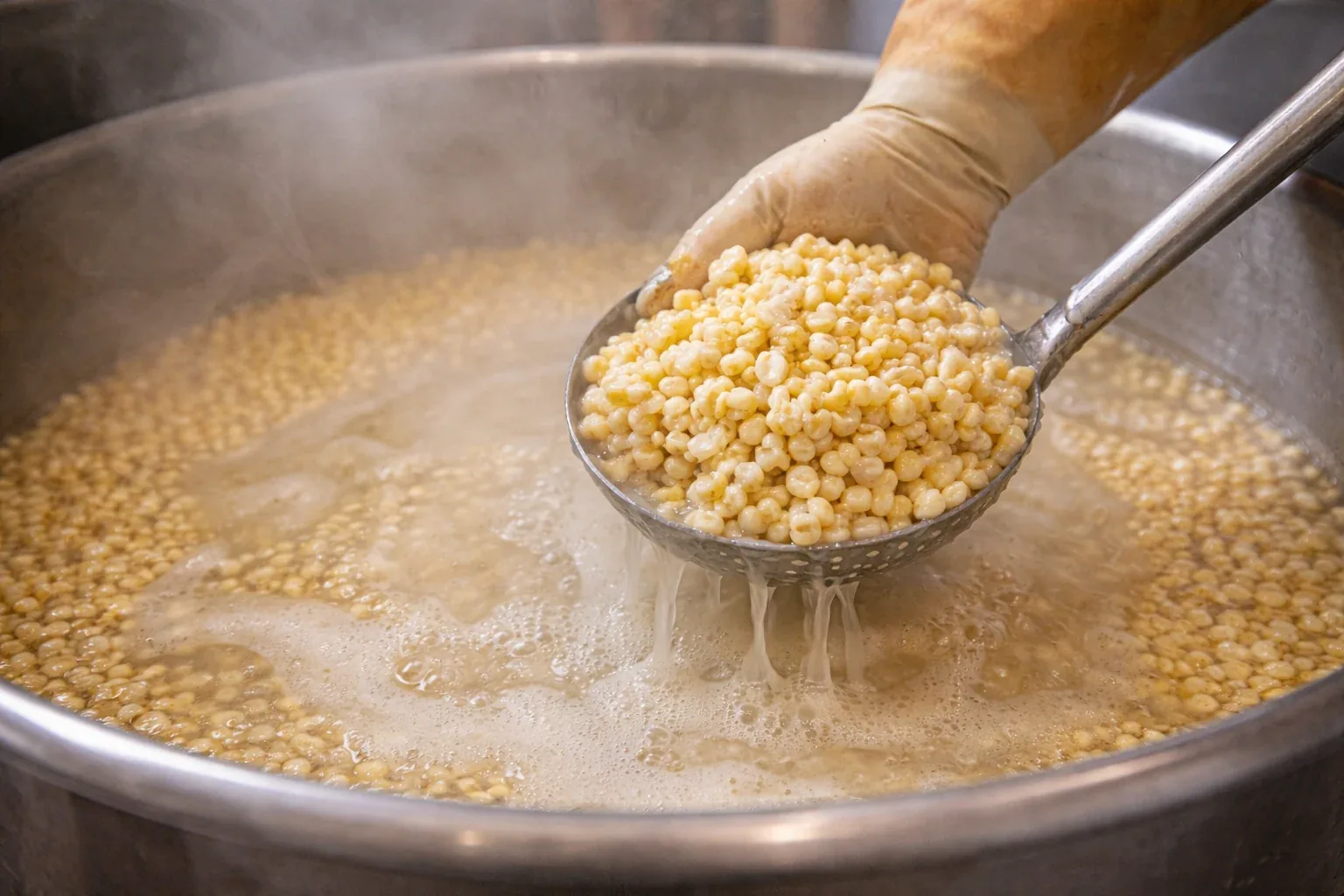
The chemistry: what lime actually does to corn
Corn kernels are tough little containers. The outer skin (the pericarp) is made of tightly structured material that doesn’t want to let go of the starches and proteins inside.
When you add lime to hot water, you raise the pH (make it alkaline). That alkalinity:
1) Loosens the hull so it can be removed
The pericarp softens and releases, which makes washing possible and grinding dramatically easier. That’s why properly nixtamalized corn can become smooth masa instead of gritty paste.
2) Changes starch behavior (texture you can feel)
Alkalinity helps starches hydrate and gel in a different way. The result is masa that holds together and tortillas that stay flexible instead of cracking, crumbling, or turning weirdly rubbery.
3) Improves aroma and flavor
That unmistakable “real tortilla” smell—warm, nutty, sweet-corn perfume—comes from the transformation of compounds inside the kernel during cooking and steeping. It’s why masa tastes like corn turned up to 11.
4) Increases available nutrients (the famous one: niacin)
A major reason nixtamalization mattered historically is that it increases the bioavailability of niacin (vitamin B3) in corn-based diets. It’s a real nutritional upgrade, not folklore.
Heat + time: why steeping overnight matters
A fast boil alone doesn’t finish the job. The steep is where the transformation becomes complete.
During steeping, the alkaline solution continues working its way into the kernel. This slow phase helps:
-
fully soften the kernel interior
-
develop consistent hydration
-
build a masa that grinds evenly
-
create better tortilla structure and performance
In practical terms: steeping is the difference between “it kind of works” and “this masa behaves like masa.”
Washing: not just rinsing—balancing
After steeping, the corn has loosened hull material and leftover lime solution on the surface.
We triple-wash to dial in the balance:
-
remove excess hulls and surface lime
-
keep enough chemistry to support texture
-
preserve the corn flavor (not chalky, not bland)
Great tortillas aren’t made by blasting everything away. They’re made by controlling what stays.
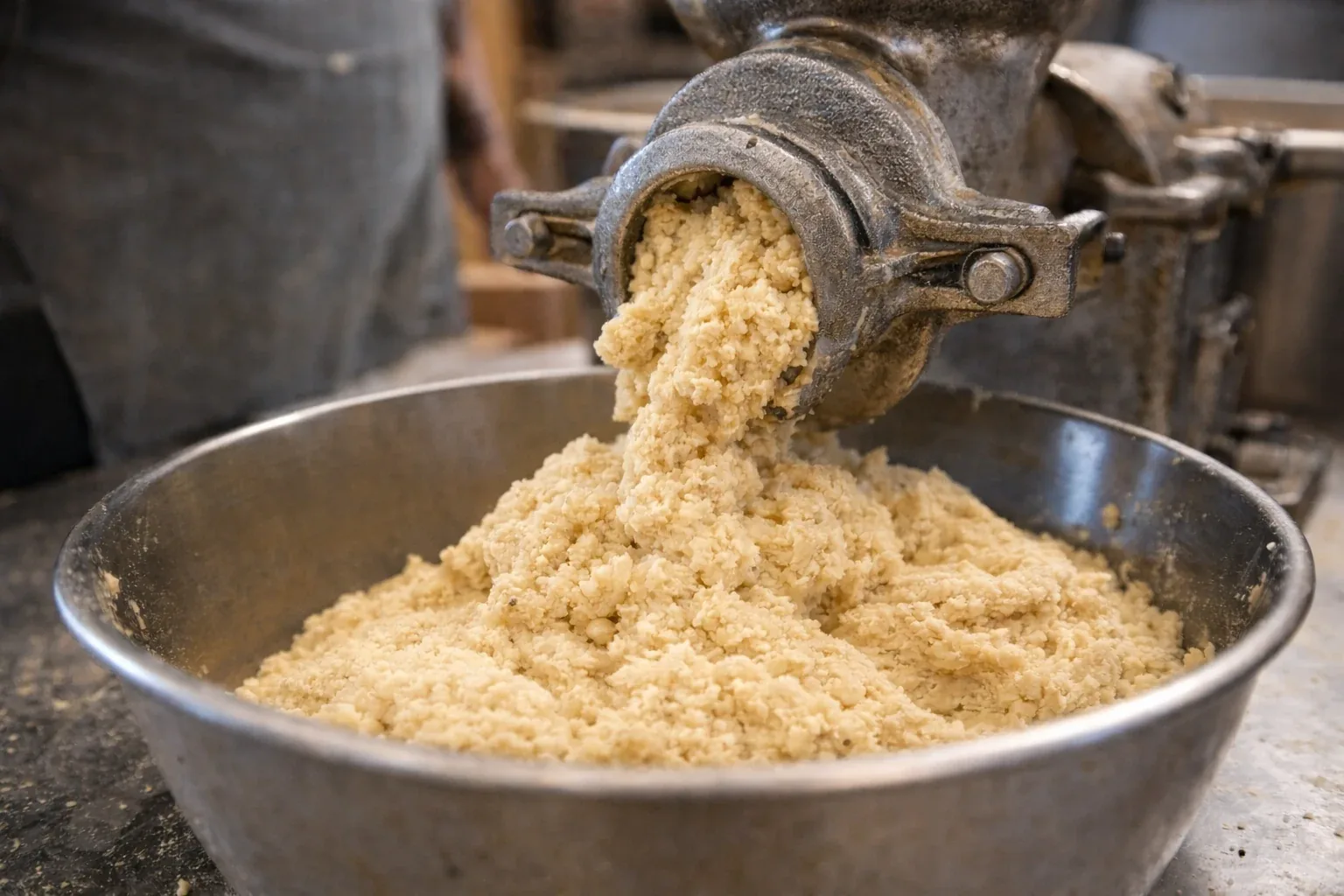
Grinding: where masa is born
Grinding nixtamalized corn is where the magic becomes tangible.
Properly processed kernels grind into a dough that is:
-
cohesive (holds together)
-
smooth (not sandy)
-
elastic (presses and cooks cleanly)
This is where industrial shortcuts often show up. If you start from pre-treated corn flour, you can make a tortilla-shaped thing—but you don’t get the same aroma, the same fresh-corn sweetness, or the same cooked texture.
Cooking: fast heat, real tortilla texture
Our tortillas cook in a very hot oven—around 800°F—for about 30 seconds. That fast, intense heat:
-
sets the tortilla structure quickly
-
drives off moisture at the right rate
-
creates a soft interior with a stable surface
-
helps lock in that fresh-corn aroma
Then we cool tortillas down (to under ~90°F), stack, and pack for either freezing for distribution or fresh pickup.
Why this matters when you eat them
Here’s what you’ll notice in the real world when tortillas start with nixtamalized corn:
Better flavor (corn that tastes alive)
Sweet, toasted, deep corn notes—without needing “flavorings.”
Better performance (they don’t betray you)
They fold, roll, and crisp up without ripping or turning gummy.
Better texture (soft + strong)
Pliable for tacos, resilient for enchiladas, crispable for chips.
Better reheating
They’re delicious fresh, and they get even better when warmed on a skillet. A little heat wakes up the aroma and brings back that just-made feel.
Nixtamalization is tradition and technology
We love the heritage of nixtamalization—but what really keeps us committed is that it’s objectively better food science.
It’s the reason tortillas have been a staple for centuries. It’s also why, in a modern kitchen, the difference between “pretty good” and “absolutely worth it” often comes down to one choice:
Start with whole corn and do the process the right way.
That’s what we do here in Vermont—because the corn deserves it, and because you can taste the difference.
FAQ
Is lime the same as citrus lime?
No. Nixtamalization uses food-grade lime (calcium hydroxide)—a mineral, not a fruit. It’s a traditional ingredient used in tiny, controlled amounts.
Does nixtamalization change the nutrition of corn?
Yes. It improves availability of certain nutrients (famously niacin) and changes how proteins and starches behave—part of why masa is easier to digest for many people.
Why do some tortillas taste bland?
Often because they’re made from pre-processed corn flour or skip the full nixtamalization + steeping process. You can still make a tortilla shape, but the flavor and texture won’t be the same.
Are your tortillas organic?
Yes. Vermont Tortilla Company is Certified Organic by the Vermont Organic Farmers (VOF).
We use certified organic corn and follow verified organic handling and production practices from whole corn through finished tortillas.
Our nixtamalization process is fully compatible with organic standards, and our certification is independently reviewed to ensure ongoing compliance.